Optimising Urban Soil Mixes for Healthy Growth in Limited Spaces
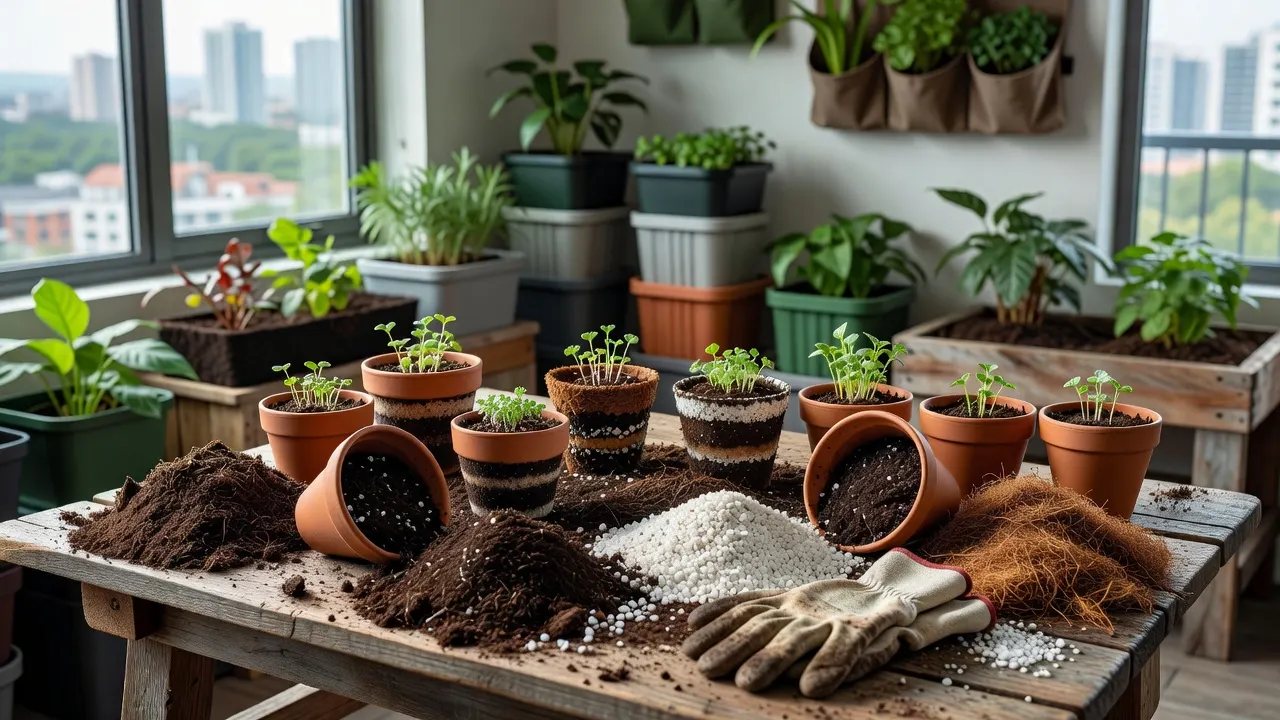
Choose a potting mix suited to your growing space, then adjust it for the way you will use it. A useful mix must support plant growth while fitting the needs of containers and other small urban spaces. Perlite can lighten a mix and make containers easier to manage, while composting can help turn kitchen scraps into soil resources.
Key facts
- A quality potting mix is key to healthy plants in container gardening.
- Urban gardening guidance covers balcony composting and building nutrient-rich soil from kitchen scraps.
- Healthy urban soils support the growth and establishment of varied urban vegetation.
Choose a mix by matching it to the growing space
Start with the place where the plants will grow, rather than looking for one mix to suit every situation. Urban gardening takes place in containers and other limited spaces, where a workable growing medium matters. A guide to container gardening identifies quality potting mix as important for healthy plants. That makes the potting mix a practical starting point when you are planning a container garden.
Next, consider how much the container will need to be moved. Perlite can lighten a soil mix, which makes containers easier to manage and transport in space-limited settings. This is relevant when moving a container is part of your routine. The source also says incorporating perlite can boost the health and productivity of urban garden soil. Treat that as a reason to consider it, not as a guarantee for every plant or setup.
Keep the decision tied to the job each part of the mix must do. A container that needs to be shifted may call for attention to mix weight; a container focused on plant growth still needs a quality potting mix. Avoid changing several things at once. Begin with the growing medium, then decide whether an amendment addresses a clear need. This gives you a straightforward way to compare options without assuming that a single recipe fits every urban garden.
Think of soil care as an ongoing choice
Soil mix is not the only part of caring for a small growing space. Urban gardening guidance includes balcony composting systems and sustainable amendments for containers, rooftops and small spaces. It also describes building nutrient-rich soil from kitchen scraps. These points make composting one possible part of a soil-care plan, rather than a requirement for every gardener.
Soil health matters beyond the container itself. The Healthy Soils, Healthy Communities project built a research and education partnership with urban gardeners and others interested in healthy gardening. (Gardening.cals.cornell.edu) A separate account says healthy urban soils are indispensable to the growth and establishment of diverse vegetation, including trees, shrubs, lawns and urban agriculture. Together, these sources support treating soil as part of a wider growing environment, not simply as a bagged ingredient.
There is also a broader role for urban soil. The urban landscape source says soil can act as a natural filter, removing pollutants from air and water. For an individual grower, that is context rather than a promise about any particular container. Keep your own choices focused on the plants and space you manage. If you add compost or another amendment, make the change deliberately and observe how the growing setup responds before making another adjustment.
What this means for you?
If you are a city dweller with a small balcony and a container you sometimes need to move, make portability and plant growth separate decisions. Begin with a quality potting mix because container guidance identifies it as important for healthy plants. Then consider whether a lighter mix would help with moving the container; perlite is described as making mixes lighter and containers easier to manage and transport.
This is a decision checklist, not a fixed recipe. First, identify the space available. Urban gardening sources address containers, rooftops, balconies and other small spaces, so choose advice that matches your setting. Second, decide whether moving the container is a real need. If it is, consider the role of perlite; if not, do not add it merely because it is mentioned in a guide. The source reports benefits, but it does not establish that every container needs the same amendment.
Third, think about whether composting fits your routine. Guidance for urban gardens includes balcony composting and using kitchen scraps to build nutrient-rich soil. You can treat this as an option for soil care, not a task that every limited-space gardener must take on.
Finally, keep each change easy to assess. Make one adjustment, then give yourself time to judge whether it suits your plants and the way you use the space. This is practical guidance, not a sourced claim about a guaranteed result. Urban soil has wider value too: healthy soils support diverse vegetation, and soil can filter pollutants from air and water. Let that wider context encourage care, without expecting a small container to solve broader urban soil issues.
What to do now?
- Map your growing space. Note where the container will sit and whether you need to move it. Urban gardening guidance covers containers, balconies, rooftops and small spaces, so use the setting that most closely matches yours.
- Choose a suitable starting mix. For container growing, select a quality potting mix; the cited guide identifies it as important for healthy plants. Avoid treating one mix as a universal answer.
- Check whether weight matters. If you need easier handling or transport, consider perlite because it can lighten the mix. Make this a targeted choice rather than an automatic addition.
- Decide whether composting fits. Explore balcony composting or using kitchen scraps as part of soil care if either suits your space and routine.
- Review one change at a time. Keep track of what you changed and how the setup works for you. Use observation to guide your next choice, rather than changing several parts of the mix together.
Sources
- Iffcourbangardens.com/blogs/news/best-soil-mix-for-urban-gardens-a-complete-guide
- Urbansgreenspace.com/soil-and-composting-urban-gardens
- Aiph.org/floraculture/news/soils-in-urban-landscapes
- Gardening.cals.cornell.edu/garden-guidance/healthysoil
About this page
Written with AI assistance from the sources listed above, then checked by automated fact, source, repetition and quality checks before publishing.
Facts and links checked on 14 November 2026. Summarises the sources linked above; check the linked source for the latest version.
How we researched this: we compiled this guide from the official and independent sources listed above, and checked the facts on the date shown. Our editorial policy explains how we choose and check sources.