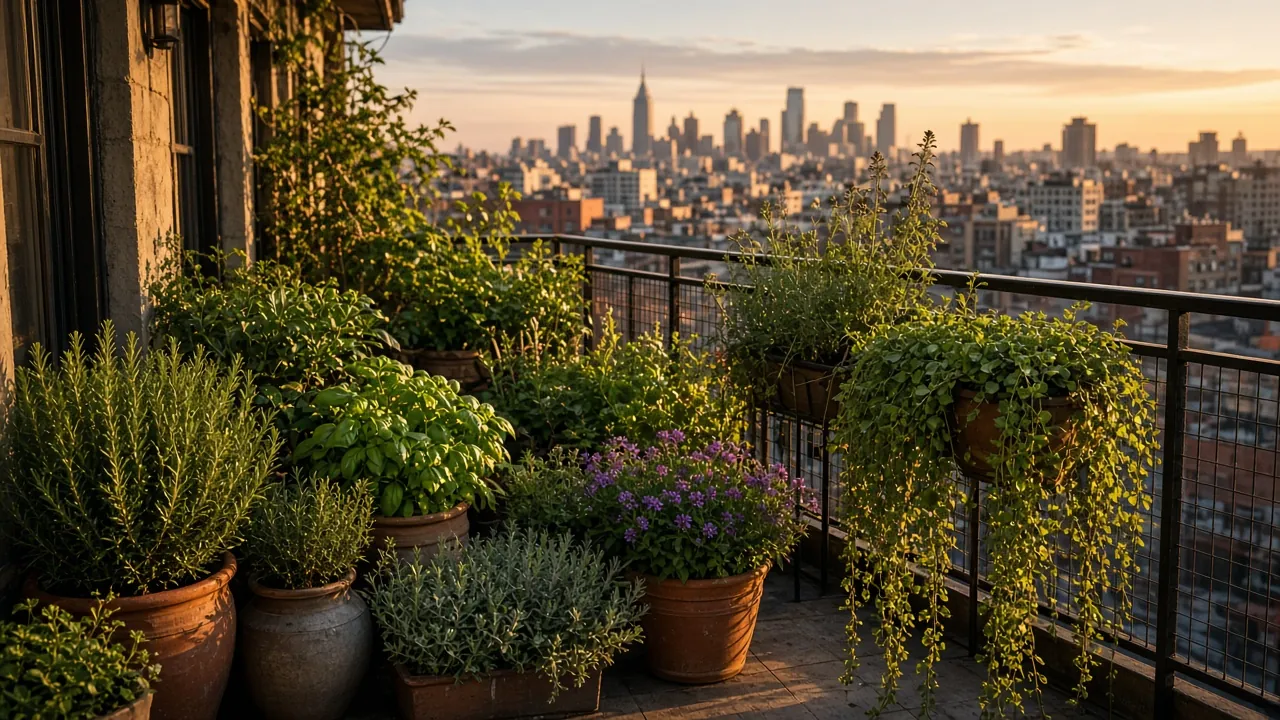
City dwellers often face the challenge of limited space on their balconies, which can make selecting the right planters a daunting task. However, with the right knowledge, you can create a lush oasis even in a compact city balcony.
This guide offers expert tips to help you choose the perfect planters for your small balcony space. With insights into optimising placement, materials, and design, as well as cost considerations and safety factors, you'll be equipped to transform your urban haven with greenery.
Understanding the Challenge of Compact City Balconies
City balconies present unique challenges for gardeners due to their limited space. These urban settings often have balcony dimensions that vary significantly, but an average size tends to be around 10-15 square meters. To create a vibrant green oasis within these constraints, innovative solutions are necessary.
Maximising vertical space is important in small balconies. The Container Store, a leading provider of organisation and storage solutions, suggests using height effectively can transform limited areas into lush retreats. This approach allows for the integration of multiple plants without overwhelming the available surface area.
The challenge lies in accommodating planters and in ensuring they do not clutter the balcony. With careful planning and strategic placement of planters, it is possible to create a harmonious balance between greenery and usable space.
Considerations for Planters
When selecting planters for your compact city balcony, it is essential to consider their proportionality to the space. Oversized planters can dominate a small area, whereas those that are too small may not provide adequate room for growth. To ensure harmony and functionality, choose planters that complement the dimensions of your balcony.
Opt for lightweight materials such as polyethylene or fibreglass for your planters. These materials are durable and easier to move and store when needed. The Container Store offers a range of options suitable for urban gardening environments, ensuring that you can easily manage your plants throughout the seasons.
Customization is key in maximising space on a balcony. One innovative solution is The Container Store's Perfect Curtain Easy Clip-On! Curtain Spacers, which can be used to create a custom look while saving valuable space. These spacers are designed for decorative purposes and can be clipped onto curtains or any hanging object, effectively adding height and depth to your planters without taking up floor space.
In addition to the materials and design of your planters, consider their functionality within the context of your balcony's layout. Planters that can be hung from railings or suspended from ceilings are excellent for using vertical space efficiently. This saves floor area and adds visual interest to your balcony.
By thoughtfully selecting planters that are proportionate in size to your compact city balcony, you can create a cohesive and well-organised space. Remember to choose materials and designs that enhance the aesthetics of your balcony and contribute to its overall efficiency.
Optimising Plant Placement
When designing a layout for a small city balcony, strategic placement of plants is important for achieving both aesthetic appeal and functionality. Arranging plants in clusters or linear patterns can enhance visual interest while avoiding clutter. Grouping similar-sized plants together creates a harmonious look that draws attention, whereas a linear arrangement adds structure and guides the viewer's gaze.
Hanging baskets are ideal for plants with minimal soil requirements, as they can be suspended from ceilings or railings. This approach frees up floor space and allows for creative vertical placements. For example, hanging baskets can be positioned along railings or in corners where other furniture might hinder planters.
Maximising vertical space is vital in compact settings. Wall-mounted planters or shelving units are excellent options for this purpose, accommodating various plants from herbs to flowering vines. Their modular design allows customization to fit available wall space and serves as an alternative to floor planters that can be bulky and occupy valuable ground area.
Consider a vertical garden setup on a narrow balcony, which typically includes hooks or brackets attached to exterior walls for growing plants vertically. This space-efficient arrangement also offers a striking visual contrast against the city skyline.
In summary, clustering and linear patterns in plant placement enhance interest without overwhelming a compact balcony. Using hanging baskets for lighter plants and wall-mounted planters for vertical gardening are practical solutions to make the most of limited space.
Material and Design
When selecting the perfect planters for your compact city balcony, material and design are important factors to consider. Opting for durable materials such as ceramic, terracotta, or metal ensures that your planters will withstand the elements and last for years. Ceramic and terracotta are excellent choices due to their natural look and ability to retain moisture, while metals like aluminium or steel offer a sleeker appearance and added stability.
The aesthetic of the planter should complement the decor of your balcony. A harmonious blend between your plants and the planters can significantly enhance the space's visual appeal. For instance, if you have a modern-themed balcony, choosing contemporary planters made of materials like glass or polished stone might be ideal. On the other hand, a rustic or vintage-inspired balcony could benefit from natural-looking ceramic or terracotta planters.
Functionality also plays a vital role in design. Planters with built-in drip trays or self-watering systems can help maintain soil moisture levels without cluttering your balcony. Additionally, consider the weight of the planter and its contents when choosing a location for it on your balcony, especially if you live in an area prone to high winds.
To maximise space on a small balcony, opt for shallow planters that are wide to accommodate root growth while saving floor space. Wall-mounted planters can also be a great solution, as they take up less ground space and add vertical interest to your balcony. Another practical option is the use of hanging baskets or plant stands that provide additional planting areas without taking up valuable floor space.
Remember, the right combination of material, design, and functionality will enhance the visual appeal of your balcony and ensure the health and longevity of your plants.
Cost and Maintenance
The cost of planters for compact city balconies varies based on size, material, and design. Large ceramic or stone planters are typically more expensive than smaller plastic or fiberglass options. To find the best deals, consult local nurseries or online retailers like The Container Store, which offers a range of space-saving solutions and decorative pieces to enhance your balcony's aesthetic (The Container Store, official source).
Regular maintenance is key for plant health in compact spaces. This involves adjusting watering schedules to the specific needs of each plant species, avoiding over-watering and under-watering. Pruning helps prevent overcrowding and promotes healthy growth (The Container Store, official source).
Self-watering planters and drip irrigation systems can simplify maintenance. Choosing easy-to-care-for plants that thrive in smaller spaces also reduces the time and effort needed for upkeep. Durable materials like polypropylene or treated wood are resistant to weather elements and require less frequent maintenance than natural materials (The Container Store, official source).
While costs and maintenance are important, plant well-being should be the primary focus. Investing in quality planters and proper maintenance can lead to a thriving urban garden on your compact city balcony.
Safety and Stability
When outfitting a compact city balcony, safety and stability are important. To prevent accidents or damage to the balcony structure, it is essential to securely fasten planters using heavy-duty anchors and brackets designed for outdoor use. These accessories often come with planters and can be purchased from reputable garden supply stores.
One effective method for securing planters is by attaching them to the railing of the balcony using metal straps or bungee cords. For a more permanent solution, consider installing bracket systems that screw into the balcony's structure. It is important to follow the manufacturer’s instructions when installing these brackets and use tools such as drill bits, screws, and wrenches for secure mounting.
In addition to fastening the planters, using non-slip mats under potted plants can provide an extra layer of safety. These mats are designed to adhere to various surfaces and prevent sliding, thereby protecting your balcony floor from scratches and reducing the risk of accidents. They are particularly useful during inclement weather when floors may become wet.
Another safety consideration is the weight distribution of the plants within the planters. Heavier pots should be strategically placed on solid surfaces or in areas of the balcony that can bear the weight more effectively. It's also wise to avoid overloading a single planter, as this can lead to structural stress and potential damage to both the planter and the balcony.
In summary, for compact city balconies, planters must be securely fastened to prevent accidents and protect the integrity of the structure. Use heavy-duty anchors, brackets, and non-slip mats to enhance stability and safety. Regularly check these components to ensure they remain in good condition and provide the necessary security for your plants and balcony space.
Your next steps
- Measure your balcony space accurately to select planters that fit perfectly without overcrowding.
- Choose planters with built-in drainage systems to prevent waterlogging, which can damage plants.
- Select lightweight materials like plastic or fiberglass for easier handling and transport.
- Opt for a sleek design to avoid visual clutter; consider colour coordination for an aesthetically pleasing arrangement.
- Regularly inspect the stability of your planters, especially after heavy rainfall, to ensure they remain secure on your balcony.
Frequently asked questions
What should you know about Understanding the Challenge of Compact City Balconies?
City balconies present unique challenges for gardeners due to their limited space. These urban settings often have balcony dimensions that vary significantly, but an average size tends to be around 10-15 square meters.
What should you know about Considerations for Planters?
When selecting planters for your compact city balcony, it is essential to consider their proportionality to the space. Oversized planters can dominate a small area, whereas those that are too small may not provide adequate room for growth.
What should you know about Optimising Plant Placement?
When designing a layout for a small city balcony, strategic placement of plants is important for achieving both aesthetic appeal and functionality. Arranging plants in clusters or linear patterns can enhance visual interest while avoiding clutter.
What should you know about Material and Design?
When selecting the perfect planters for your compact city balcony, material and design are important factors to consider. Opting for durable materials such as ceramic, terracotta, or metal ensures that your planters will withstand the elements and last for years.
Sources
- www.containerstore.com/s/home-decor/decorative-objects-vases/perfect-curtain-easy-clip-on-curtain-spacers/12d?productId=11030396
- www.containerstore.com/organisation-projects/bathroom/tip/space-saving-small-bathroom-tips
Facts, prices and links checked on 19 October 2026. Prices and features change, so confirm on the official pages before you decide.